



Music opens a room I had not realised I had stopped entering. It was an unremarkable moment that made me sit back and sit up. I was asked, casually, what music I liked, and found I did not have a good answer.
Not because I disliked music.
But because I no longer knew what was out there.
My work in ageing had filled my days, and my listening had settled into a small, reliable set. Nothing was wrong with it. What had quietly disappeared was choice. I did not refuse the new. I simply stopped reaching for it.
It was only later that I recognised this moment for what it was.
Not a personal failing.
And not really about music.
But a small example of how easily routine and the noise of daily life can replace choice, even in lives that remain full.
Why Music Stays Available
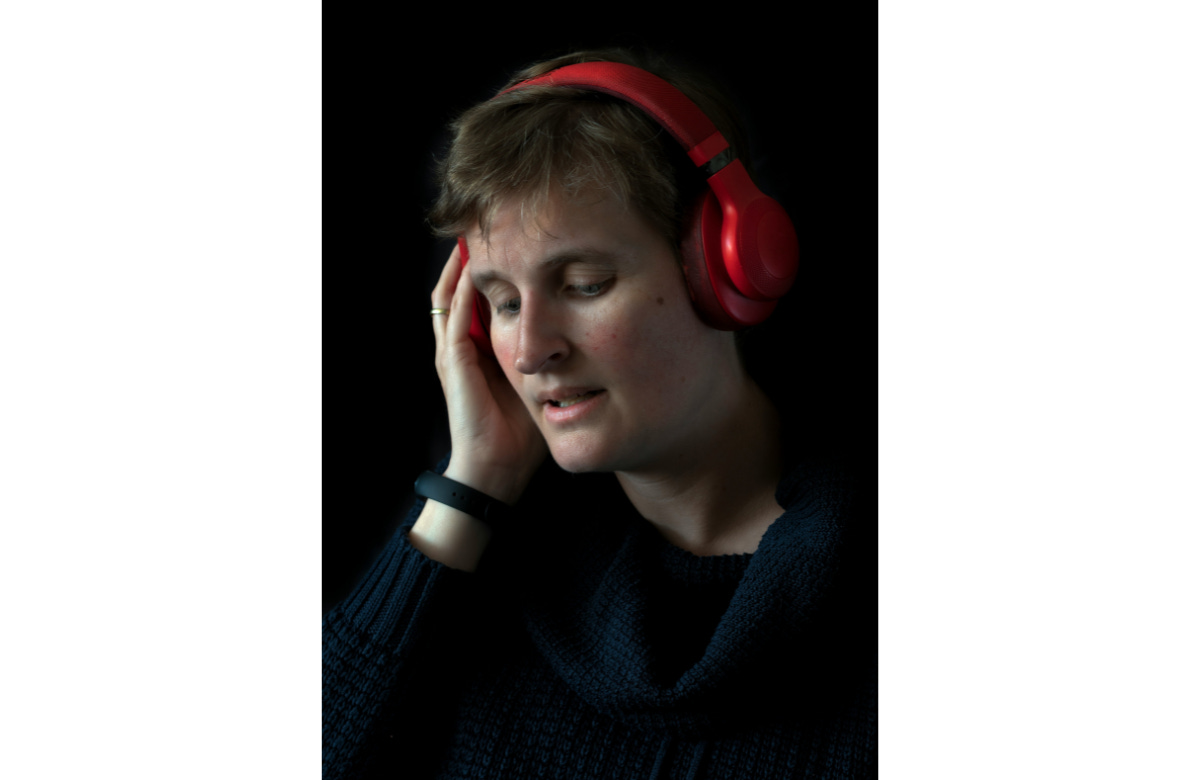
Musical memory travels across emotional, sensory, motor, and associative networks rather than being confined to language or short term recall. A familiar melody does not require effort to remember. It often reinstates a place, a time, a space.
For me, it brings back memories of movement and freedom. Mood, rhythm, bodily orientation, and emotional tone return together.
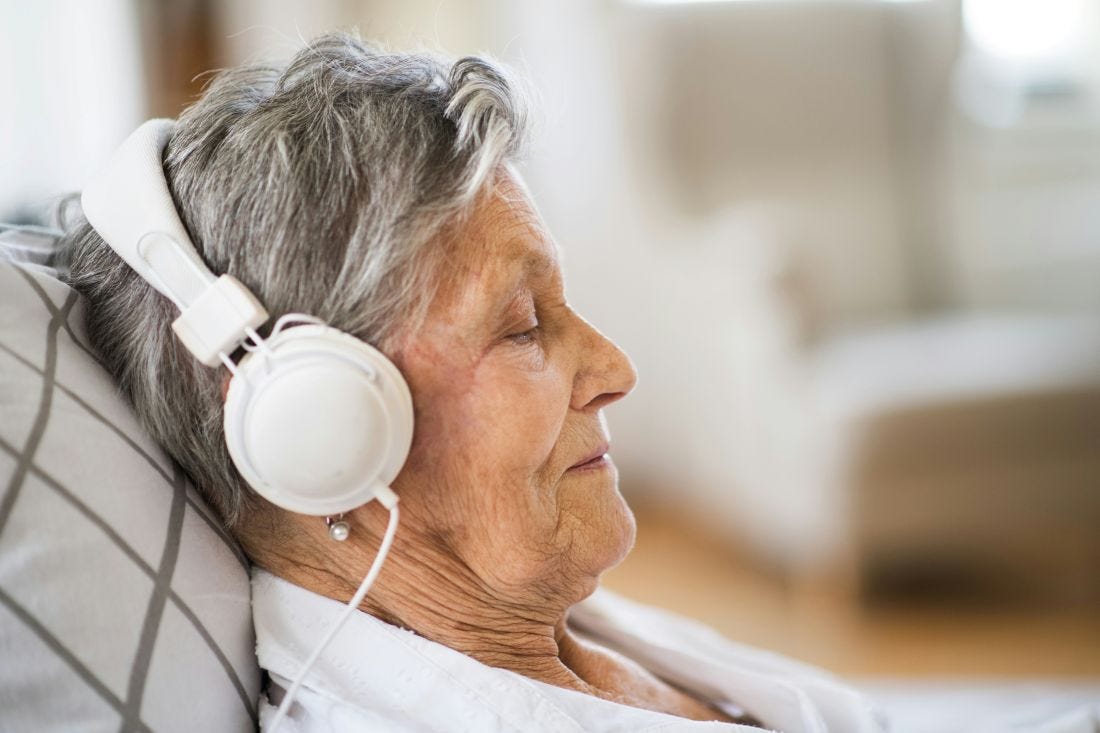
I enjoy seeing people with large headphones on, eyes closed, deep in conversation with their music. Humming. Singing. Calm and present.
In those moments, they are not being managed or assessed.
They are simply somewhere else.
Music remains available in a way few other experiences do.
It offers a way in,
A way to recognise oneself, and
A way to arrive without instruction.
That is what makes music different from so many other forms of engagement. It does not require explanation, competence, or confidence. It can be entered quietly, on one’s own terms.
How Systems Organise Life
Music does not restore cognition or alter disease progression, but it preserves access to emotion, identity, and continuity.
This is not just anecdotal. Large population studies, including analyses from the ASPREE cohort, show that people who regularly listen to music or play an instrument was associated with a decreased risk of dementia.
The point is not prevention. It is that music continues to work with the brain long after many other pathways become harder to access.
As we age, more of life becomes organised. Appointments, schedules, services, and systems increasingly determine where people are expected to be and when. Even when well intentioned, these structures prioritise predictability and efficiency.
We talk often about independence, but much less about another kind of choice.
The ability to decide what fills the day.
To shift mood.
To enter a different rhythm.
To feel invited rather than managed.
These are not luxuries. They are what distinguish a life that feels lived from one that feels administered.
This becomes most visible with cognitive decline. Where so much of life is organised by others, access to something self-chosen matters. Not as treatment and not as therapy, but as a way of preserving recognition and steadiness when many choices are no longer within reach. And yet, even as evidence accumulates, the environments in which people live with dementia rarely prioritise this kind of access.
When older adults describe returning to music later in life, they rarely speak of improvement. They speak of pleasure, rhythm, companionship, and of having somewhere to go.
Music exposes this gap because it resists instrumental logic. It does not need to justify itself, and it does not promise outcomes. It allows people to arrive as they are and to choose what they take with them.
Something changes when music is offered not as performance to be consumed, but as a shared space to enter. Choice matters here, as does regularity and the absence of pressure. When something returns week after week, without judgement or escalation, people gather because the space remains open.
Design That Keeps Options Open
This is what drew my attention to Sage Stream and its founder Anthony Cirillo .
Not as technology
Not as therapy,
But as a design choice.
What is immediately visible is range. Genres sit alongside one another without hierarchy. Artists appear as people rather than polished performances. Events are live, varied, and time bound, but not demanding. There is no prescribed pathway and no narrowing disguised as personalisation.
I noticed this most clearly through Anthony’s presence. Not because he directs attention, but because he refuses to control it. He introduces artists as people, not as products. He leaves space for uncertainty, for curiosity, and for people to arrive without knowing what they are looking for. Nothing is over explained. Nothing is framed as improvement.
People are not funnelled. They browse, linger, return, and choose.
What is being protected here is not a genre or a mood, but access.
Access to difference
Access to atmosphere
Access to entry without instruction.
Someone can arrive knowing exactly what they want, or with no idea at all. Both are legitimate starting points.
This matters because so many experiences offered to older adults arrive pre framed. They promise stimulation, calming, or engagement. Sage Stream does something quieter. It holds the space open and trusts people to decide where to go.
That trust is not incidental. It is by design.
What Dignity Requires
What is at stake here is not enrichment or engagement. It is whether people are still allowed to choose where their attention goes.
Music makes this visible because it opens a door and does not tell you what to do once you step inside.
You can stay. You can leave. You can return.
You decide.
People do not only need support or structure. They need places to go.
When those places remain open, lives remain recognisably their own.
That difference is easy to overlook.
It should not be.
I'm writing to express my profound gratitude for "Somewhere to Go" and for truly seeing Sage Stream in a way that honestly took my breath away.
Your piece articulates something I've struggled to put into words since launching Sage Stream. You write about music not as therapy or outcome, but as a space people can enter "quietly, on one's own terms." That's exactly what we've been trying to create— an open door.
When you wrote, "People are not funnelled. They browse, linger, return, and choose," you captured the fundamental design principle that guides everything we do. In an industry obsessed with personalization algorithms and engagement metrics, we've deliberately chosen to hold space open and trust people to decide where their attention goes. Reading your words, I realized you understand this isn't just a feature—it's the entire point.
What moves me most is how you connected Sage Stream to the broader question of dignity in aging. You're right that this isn't really about music. It's about whether people are "still allowed to choose where their attention goes" when so much of later life becomes organized by others. Your phrase "the difference between a life that feels lived and one that feels administered" will stay with me.
Too often, innovation in aging is evaluated through a narrow, transactional lens. Your piece recognizes something deeper: that engagement, meaning, and emotional presence are not “nice-to-haves,” but foundational to dignity as we age. Coming from someone who has shaped the global conversation on aging, that recognition carries real weight.
With deep appreciation and respect...
Jane,
Your reflection beautifully captures how music reopens doors we didn't know had quietly closed, offering a space of pure, unpressured entry that preserves dignity, identity, and emotional continuity—especially as life becomes more structured with age.
This resonates deeply in the Indian context, where traditional music has long served as an accessible, lifelong companion across every stage of life, often without needing explanation or justification. From birth to the later years, Indian classical and devotional traditions weave music into the fabric of existence, allowing people—particularly the elderly—to lose themselves in its notes as a natural, sustaining practice.
In childhood and early life (samskaras like naming ceremonies or upanayana), lullabies and simple mantras introduce rhythm and melody as sources of comfort and protection. As one grows into family and social roles—through weddings filled with folk songs, mangal geet, and celebratory bhajans—music marks joy, union, and transition. In adulthood and middle age, ragas aligned with times of day (like morning Bhairav or evening Yaman) and seasonal melodies accompany daily rituals, work, reflection, and devotion.
Yet it is in later years that this becomes most profound. Many older Indians find profound solace and immersion in bhajans, kirtans, and classical ragas. Groups gather in temples, homes, or community satsangs to sing devotional songs—often call-and-response kirtans invoking deities like Krishna or Shiva—where voices blend in shared devotion. Elderly individuals frequently sit with eyes closed, swaying gently or clapping tal, completely absorbed in the melody and words. The harmonium, tabla, or even just a simple tanpura drone creates an atmosphere where time dissolves; worries fade, and a quiet transcendence takes over.
This isn't about performance or achievement—it's about arrival, much like you describe. Familiar ragas (such as Darbari Kanada for introspection at night or soothing Yaman for evening calm) evoke deep emotional and spiritual recall, often linked to lifelong memories of family, festivals, or personal devotion. Studies on Carnatic and Hindustani traditions highlight how long-term engagement with these forms supports emotional steadiness and cognitive reserve in ageing, but beyond that, elders speak of the sheer pleasure: the way a raga's slow unfolding invites the mind to wander freely, the rhythm that syncs with breath, the companionship in collective singing without judgment.
In India, music remains "available" in this way—through morning bhajans in parks, evening kirtans at home, or temple gatherings—preserving choice and selfhood even when other aspects of life are organised by routines or caregivers. Older adults don't just listen; they often become lost in the notes, humming along, eyes distant yet present, finding a private yet communal space that feels entirely their own.
Your piece on Sage Stream reminds me of this ethos: holding space open, trusting people to enter on their terms, without funneling or framing. It's a design that echoes how Indian traditions have long protected access to music as a quiet act of dignity—something that resists being reduced to therapy or outcome, yet quietly sustains the soul.
Thank you for this thoughtful exploration. It invites us all to notice those small, reclaimable doors—and perhaps step through them more often.
Warm regards,
Himanshu Rath
agewellfoundation.org